
Cold tiles underfoot on a winter morning are one of the most common bathroom complaints we hear from Gosport homeowners.
Underfloor heating solves that, but choosing between the two main systems isn’t always straightforward. Here’s a clear, practical comparison to help you decide.
Why Consider Underfloor Heating for Your Bathroom
Beyond comfort, underfloor heating frees up wall space by removing the need for a radiator, distributes warmth evenly across the whole floor, and works quietly in the background.
It also pairs well with tiled and stone floors, which tend to feel cold but hold heat efficiently once warmed.
How Electric Underfloor Heating Works
Electric systems use a mat or loose cable fitted beneath the tiles, connected to the mains and controlled by a thermostat.
- Thin profile – ideal for renovations where floor height is limited.
- Fast to warm up – reaches temperature in around 30–60 minutes.
- Simple installation – fits neatly into most bathroom refurbishments without major disruption.
How Wet Underfloor Heating Works
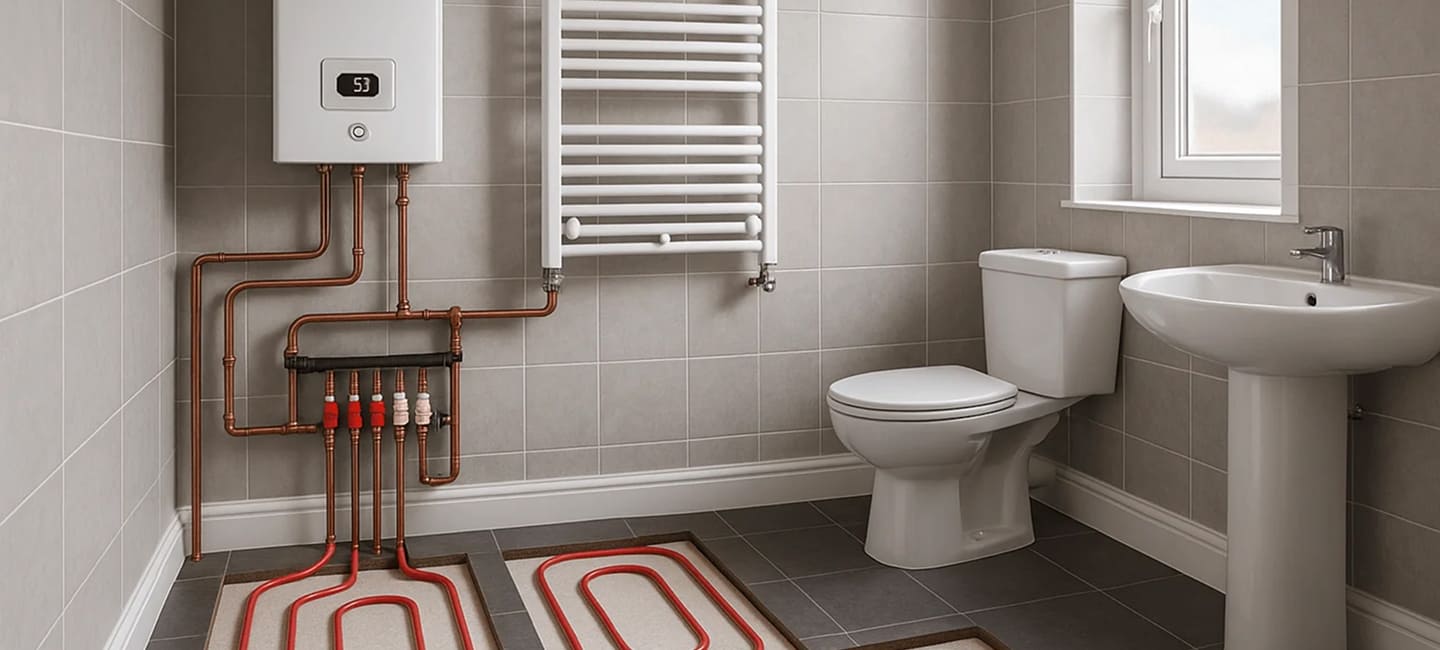
Wet systems circulate warm water through a network of pipes connected to your boiler or heat pump, gently heating the floor from below.
- Lower running cost – cheaper to run over time, especially alongside an efficient boiler or heat pump.
- Whole-home compatible – can extend into wider renovation or new-build projects.
- Higher upfront cost – installation is more involved and usually needs a raised floor build-up.
Electric vs Wet Underfloor Heating: Key Differences
Comparing electric vs wet underfloor heating side by side makes the trade-offs much clearer:
- Installation cost: electric is cheaper to install; wet systems cost more upfront.
- Running cost: wet systems are typically cheaper to run long-term; electric costs more per hour.
- Floor height: electric adds very little; wet systems need more depth.
- Heat-up time: electric warms faster; wet systems take longer but hold heat better.
- Best suited for: electric suits single-room upgrades; wet suits full renovations or new builds.
Which Is Better for a Bathroom Renovation?
Choose Electric If…
- You’re renovating just the bathroom, not the whole house
- Floor height is limited
- You want quick warm-up before your morning shower
- You’re working with a tighter renovation budget
Choose Wet If…
- You’re doing a larger renovation or new build
- You already have, or plan to install, a compatible boiler or heat pump
- You want the lowest possible running costs over time
- Floor depth isn’t a limiting factor
Underfloor Heating Installation Cost and Time
Electric systems typically cost less to fit and can usually be installed within a day, alongside your tiling work.
Wet systems take longer, often two to three days, and involve more groundwork, but reward you with lower bills for years afterwards.
Either way, professional underfloor heating installation should always include a thermostat, insulation board beneath the system, and a full test before tiling begins.
Why Choose Oasis Bathroom Solutions
Oasis Bathroom Solutions has fitted both electric and wet underfloor heating systems across Gosport, Portsmouth, Fareham, and Southampton for over 15 years.
We assess your floor build-up, budget, and heating setup before recommending a system, so you get honest advice rather than a one-size-fits-all answer.
Every installation is carried out by our qualified team, fully tested, and backed by our 2-year workmanship guarantee.