
Cold tiles underfoot are one of the most common bathroom complaints, which is why bathroom underfloor heating has become such a popular upgrade.
But with energy costs still on everyone’s mind in 2026, is it actually worth the investment? Here’s an honest look at cost, comfort, and value.
What Is Bathroom Underfloor Heating and How Does It Work?
Electric Systems
Electric systems use a thin heating mat or cable laid beneath the tiles, connected to the mains and controlled by a wall thermostat.
Wet Systems
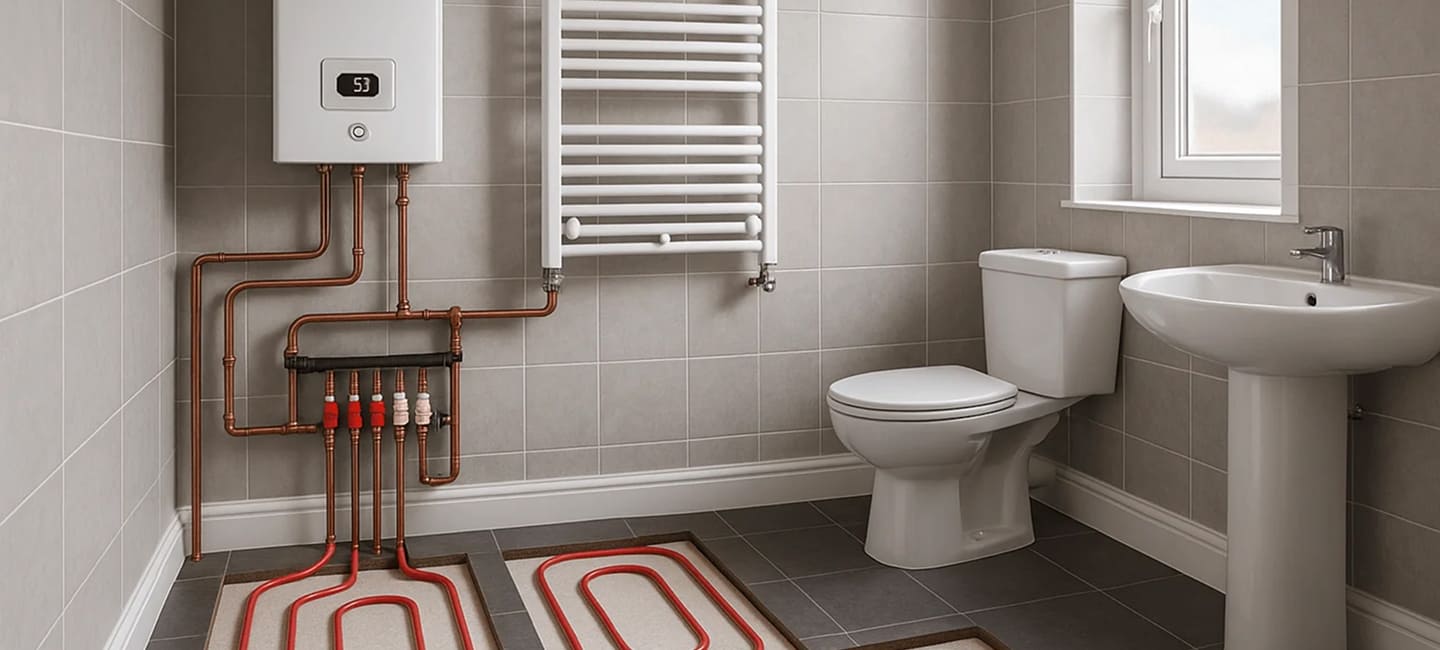
Wet systems circulate warm water through pipework connected to your boiler or heat pump, gently warming the floor from below.
Benefits of a Heated Bathroom Floor
A heated bathroom floor offers more than just comfort on a cold morning:
- Even warmth – heat spreads across the whole floor rather than one corner of the room.
- Faster drying – warm floors dry more quickly, helping reduce condensation and mould risk.
- More wall space – no radiator means more room for storage or a larger mirror.
- Added property value – buyers increasingly view it as a desirable, modern feature.
Underfloor Heating Installation Cost in 2026
- Electric underfloor heating installation: typically £400–£800 for a standard bathroom, including thermostat.
- Wet underfloor heating installation: typically £900–£1,800, reflecting pipework and boiler connection.
Costs vary with bathroom size, floor build-up, and whether it’s a new installation or part of a wider renovation.
Is Bathroom Heating Worth the Investment?
For most households, yes. Electric bathroom heating costs only a few pence per hour to run and is usually only needed for short bursts each day.
Wet systems cost more to install but run more cheaply over time, especially when paired with an efficient boiler or heat pump. Either way, the comfort and drying benefits tend to outweigh the running cost for a room used daily.
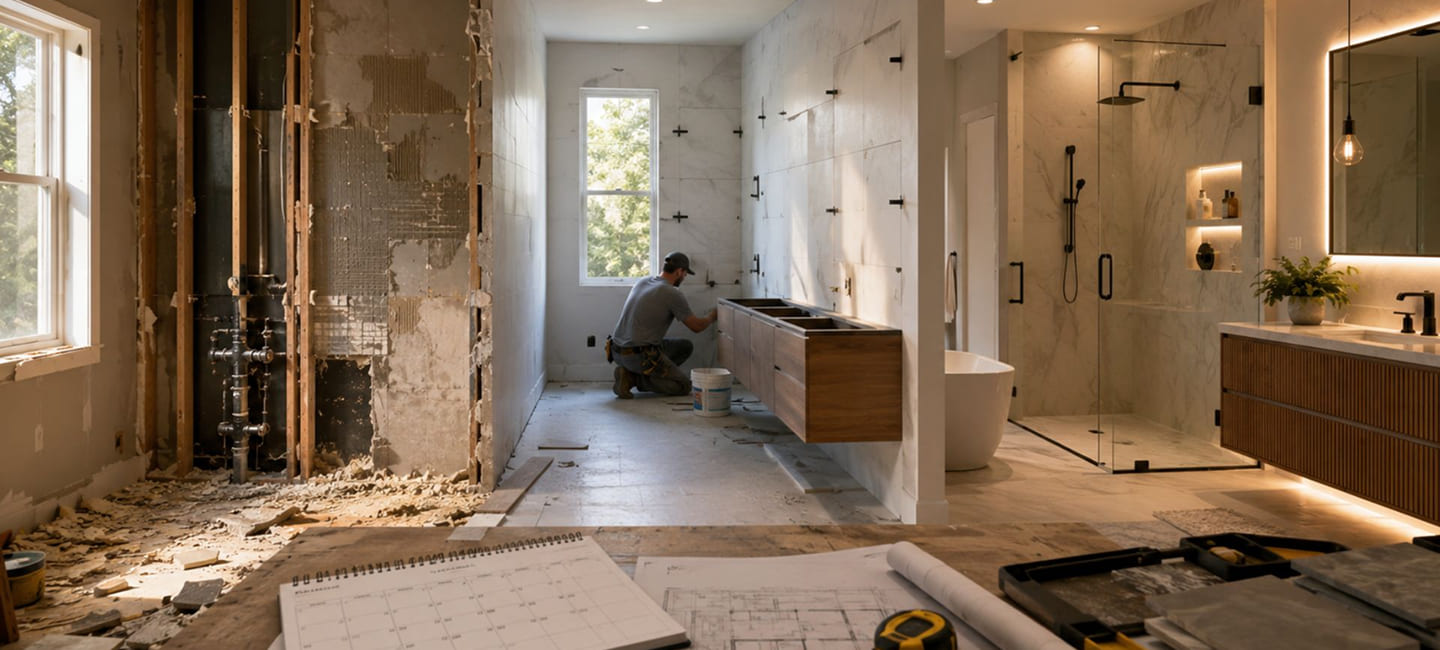
Underfloor Heating Installation Process
- Floor assessment to check height, insulation, and suitability.
- Insulation board fitted to direct heat upward rather than into the subfloor.
- Heating mat, cable, or pipework laid and connected to the power or boiler.
- System tested thoroughly before tiling begins.
- Tiling completed, followed by a final function test and thermostat setup.
Read More:
How Much Does It Cost to Install Tile in a Bathroom?
Tips to Get the Most from Your Heated Bathroom Floor
- Set the thermostat on a timer to warm the room before your morning shower
- Choose porcelain or stone tiles, which retain heat well
- Add proper insulation board underneath to reduce heat loss and running cost
- Combine with a smart thermostat for better control over daily use
Why Choose Oasis Bathroom Solutions
Oasis Bathroom Solutions has fitted electric and wet underfloor heating systems across Gosport, Portsmouth, Fareham, and Southampton for over 15 years.
We assess your floor build-up and budget honestly before recommending a system, rather than pushing the most expensive option.
Every installation is fully tested before tiling and backed by our 2-year workmanship guarantee.